Kayaking and Paddleboarding With Your Dog
How to choose a stable kayak or paddleboard, train your dog to ride calmly, and stay upright and safe on the water.
This guide contains affiliate links. If you buy through them we may earn a small commission at no cost to you. Details.
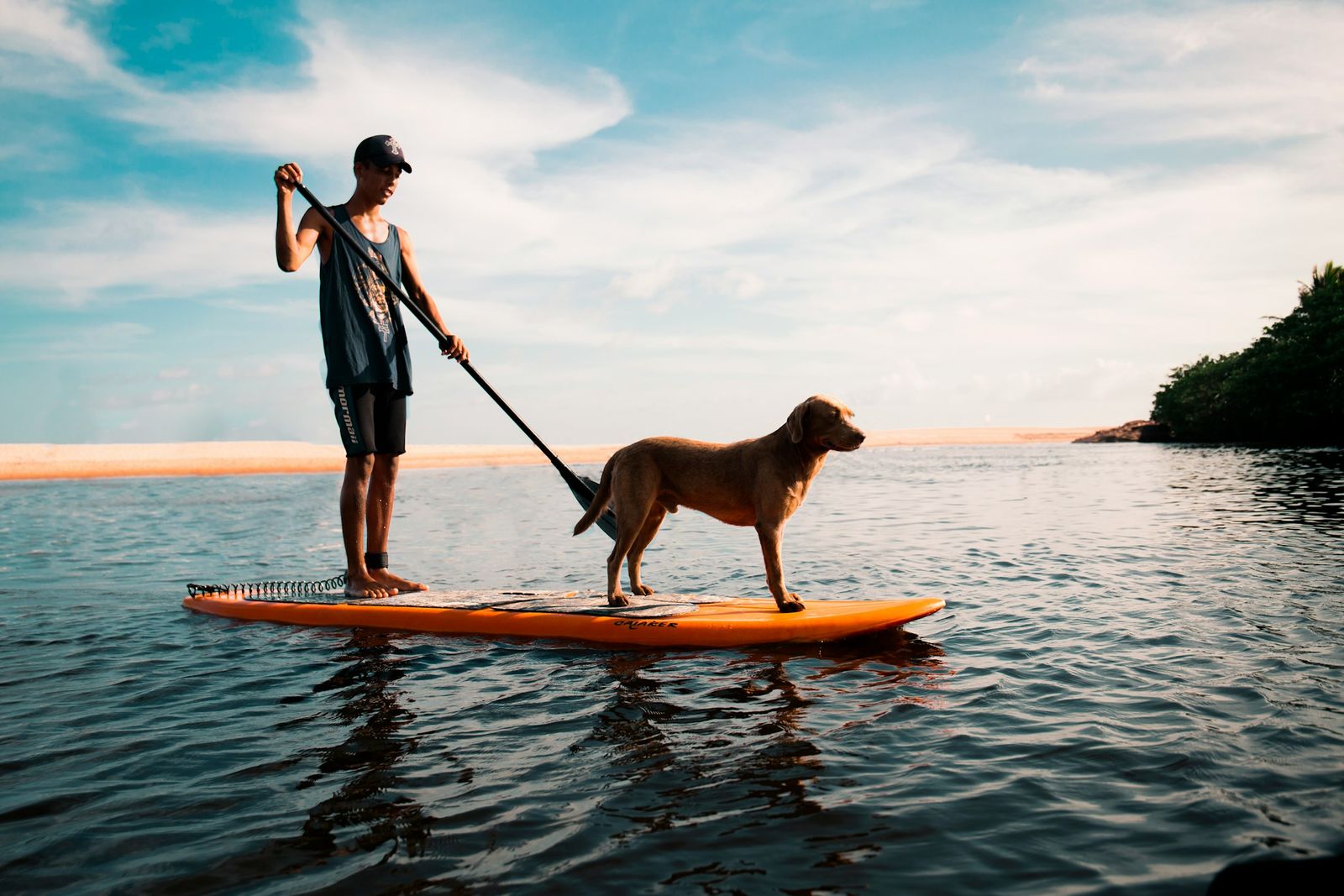
Paddling with your dog is a peaceful way to explore. It takes a stable craft, a calm dog and a lot of practice on land first.
Choosing your craft
Kayaks: - Sit-on-top kayaks are best for dogs: wide, stable, with open deck space and easy to climb back onto. Tandem sit-on-tops give big dogs more room. - Avoid narrow touring kayaks and small sit-in kayaks. - Check the weight capacity covers you, your dog and your gear with room to spare. Sit-on-top kayaks
Paddleboards: - Choose a wide board, at least 32–34 inches wide, and longer boards for bigger dogs. - Add a traction pad on the front so your dog doesn't slip. Traction pads Wide paddleboards
Training on land first
- Set the kayak or board on grass and reward your dog for stepping on, sitting and lying down in their spot (usually the front of a board or in front of you in a kayak).
- Practice "stay" and "settle" on the craft for longer and longer.
- Rock it gently so they get used to movement.
- Teach a cue for getting on and off.
On the water
- Life jacket with a handle on your dog, and on you. Dog life jackets
- Start in calm, shallow water close to shore.
- Keep the first trips short, around 10–15 minutes.
- Kneel on a paddleboard until your dog settles. Your balance improves with a lower center of gravity.
- Paddle smoothly. Sudden movements unsettle dogs.
- Plan for falls. You will both get wet. Practice getting your dog back on by the handle in shallow water.
- Bring water and shade on longer trips, and take shore breaks.
- Avoid wildlife. Dogs who launch after ducks will tip you over.
When to stay ashore
Skip paddling with your dog in wind, waves, currents, cold water or boat traffic, and with dogs who can't yet stay calm on land.
This guide is general information, not veterinary advice. If your dog is sick, hurt or acting unusually, call your veterinarian.