Dog Life Jackets: Who Needs One and How to Choose
Even strong swimmers tire, cramp or get swept away. How to pick a life jacket that fits, floats your dog the right way and lets you grab them fast.
This guide contains affiliate links. If you buy through them we may earn a small commission at no cost to you. Details.
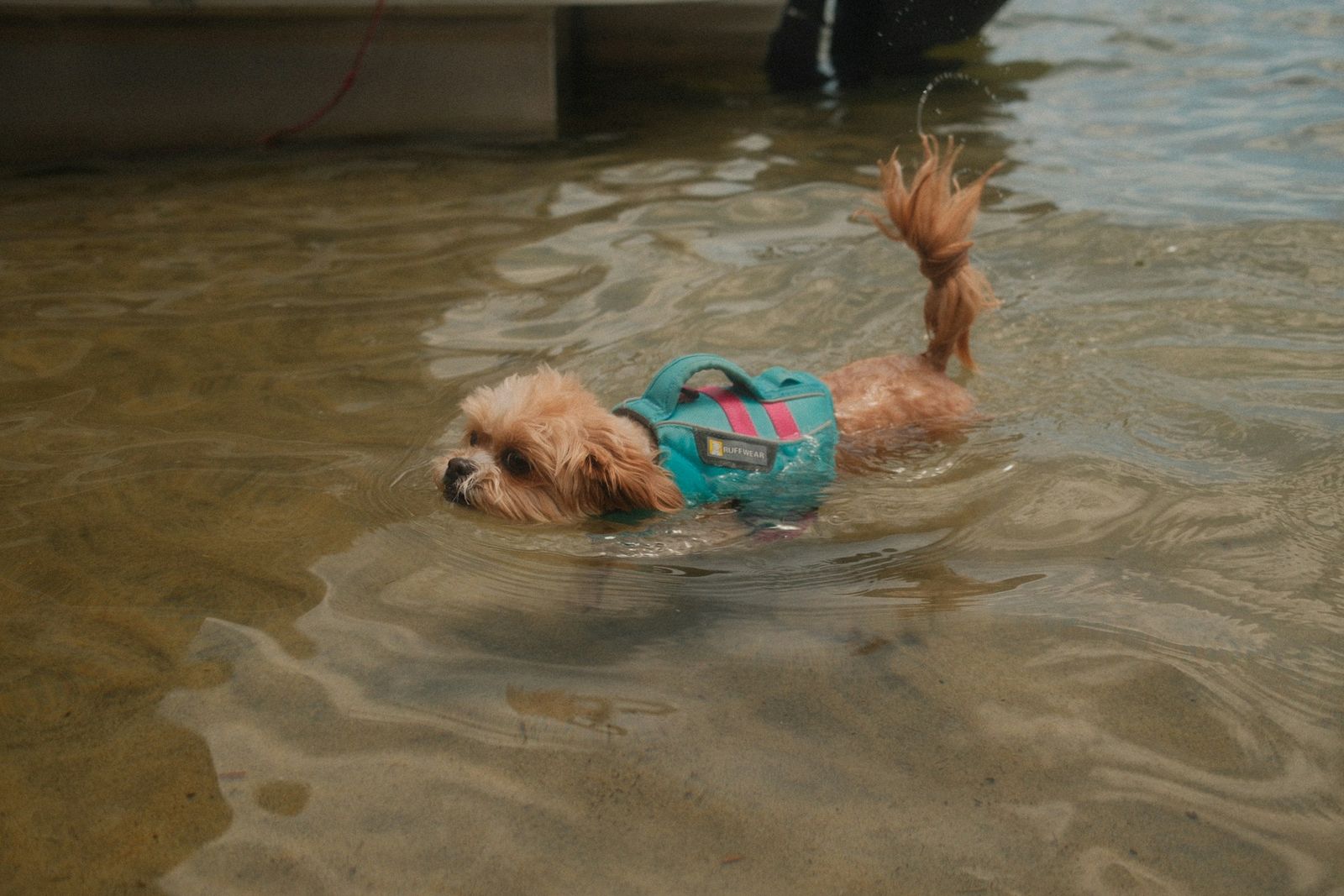
"My dog's a great swimmer" is the most common reason dogs go without a life jacket. But strong swimmers get tired, get cold, get caught in currents and fall off boats. A life jacket buys time.
Which dogs need one
Always: - On boats, kayaks and paddleboards - In open water, currents or waves - Beginners and puppies learning to swim - Flat-faced breeds (Bulldogs, French Bulldogs, Pugs, Boston Terriers), short-legged breeds (Dachshunds, Corgis, Basset Hounds) and heavy-chested dogs - Seniors, and dogs with arthritis or health problems - Small dogs, who tire and chill quickly
Strongly recommended: for any dog in deep water, especially when they're likely to swim for a long time.
What to look for
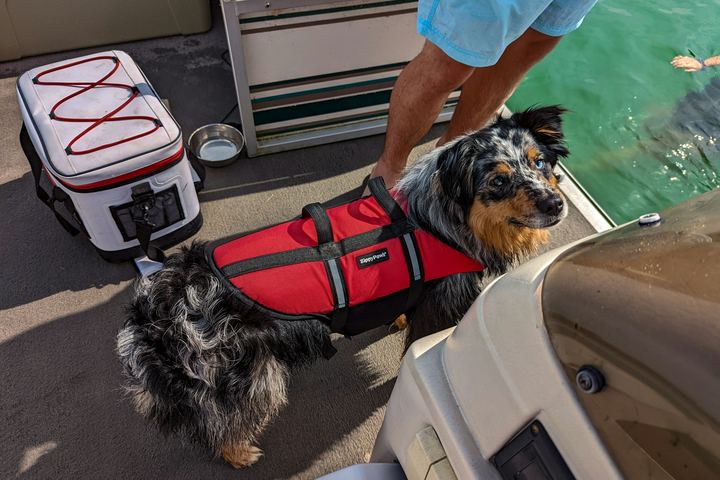
- A grab handle on the back. This is how you'll lift your dog out of the water or back into a boat. It should be sturdy and stitched into the body of the jacket. Life jackets with handles
- Flotation under the chest and neck. A float panel under the chin helps keep the head up, especially for flat-faced dogs.
- Bright color and reflective trim so you can spot your dog in the water.
- Adjustable straps with buckles that won't slip when wet.
- A D-ring for a leash.
Getting the fit right
- Measure your dog's chest at the widest point, just behind the front legs, and check the brand's size chart. Weight alone isn't enough.
- Snug, not tight. You should fit two fingers under each strap.
- Test it. Lift your dog gently by the handle. The jacket shouldn't slide forward over the head or let the dog slip out.
- Check range of movement. Your dog should be able to walk, sit and paddle normally.
Introduce it on dry land
Put the jacket on at home for a few minutes at a time with treats and praise. Then try shallow water, holding the handle while your dog gets used to floating. Most dogs swim more calmly and level in a jacket once they feel how it supports them.
Care
Rinse the jacket with fresh water after each use and let it dry fully out of direct sun. Check buckles, straps and stitching every season, and replace a jacket that's torn, waterlogged or outgrown.
A life jacket is support, not supervision. Keep watching your dog the whole time they're in the water.
This guide is general information, not veterinary advice. If your dog is sick, hurt or acting unusually, call your veterinarian.